


Mission
To collect and report complete, high-quality, and timely population-based cancer data in Louisiana to support cancer research, control, and prevention.
Vision
To reduce suffering and death from cancer using information collected by the Louisiana Tumor Registry.
History
Cancer registration in Louisiana began in 1947 at the Charity Hospital Tumor Registry in New Orleans. In 1974, as part of its Surveillance, Epidemiology and End Results (SEER) Program, the National Cancer Institute provided funds for a population-based cancer incidence and survival registry covering Jefferson, Orleans, and St. Bernard parishes. Five years later, the Louisiana Tumor Registry (LTR) was transferred to the state Office of Public Health, which expanded the LTR catchment area in 1983 to include all 35 parishes of South Louisiana (Regions I-V). In 1988, when the 29 parishes of North Louisiana (Regions VI-VIII) were added, statewide coverage was achieved. Milestones in the history of the LTR include: 1974: The LTR became one of the original participants in the National Program of Cancer Registries, funded by the Centers for Disease Control and Prevention (CDC). 1995: The LTR was transferred from the Office of Public Health to the LSU Board of Supervisors. Since then, the LSU Health Sciences Center in New Orleans has been responsible for the cancer registry program, providing the state funding. 2001: The Louisiana Tumor Registry was selected as one of four new expansion registries to join the prestigious SEER Program after a rigorous competitive application process. Oversight of the registry is exercised by the Louisiana Cancer and Lung Trust Fund Board. Members of this board represent various health institutions throughout the state and are appointed by the governor.
Accessibility statement: The School of Public Cancer in Louisiana collection is an archived collection intended for reference or research use only; not all documents have been remediated to meet PDF/UA v1 compliance.
Please see individual items for specific accessibility statements.
For general inquiries about this collection, please contact [email protected]



-
Cancer in Louisiana: Volume 15
Patricia A. Andrews, Catherine N. Correa, Xiao-Cheng Wu, Mei-Chin Hsieh, Beth A. Schmidt, and Vivien W. Chen
The Louisiana Tumor Registry (L TR) is pleased to release Cancer in Louisiana, Volume 15, which provides statewide statistics on cancer incidence and mortality for the years 1994-1998. It also includes incidence statistics for the Industrial Corridor and compares state and national figures for incidence and mortality. The monograph results from a collaborative effort of the LTR central office, its regional registries, hospital registries, other facilities in Louisiana, and the central registries of neighboring states. The L TR is grateful for the assistance and cooperation of all of these groups. The data in this volume provide an accurate, meaningful description of cancer incidence and mortality in the state. A summary of the findings is presented below.
The Louisiana Tumor Registry can be reached at [email protected]
-

Cancer in Louisiana: Volume 14
Vivien W. Chen, Beth A. Schmidt, Xiao-Cheng Wu, Catherine N. Correa, Patricia A. Andrews, Mei-Chin Hsieh, and Mohammed N. Ahmed
The Louisiana Tumor Registry (LTR) is delighted to release Cancer in Louisiana, Volume 13, which provides statewide statistics on cancer incidence and mortality for the years 1993-1997. This monograph is an achievement of the staff from the LTR central office, regional registries, hospital registries, and other reporting facilities throughout Louisiana and central registries from neighboring states. These data have met the rigorous criteria of the North American Association of Central Cancer Registries for completeness of reporting, non-duplication ofrecords and internal consistency among data items. The data in this volume provide an accurate, meaningful description of cancer incidence and mortality in the state.
The Louisiana Tumor Registry can be reached at [email protected]
-
Cancer in Louisiana: Volume 13
Xiao-Cheng Wu, Catherine N. Correa, Patricia A. Andrews, Mei-Chin Hsieh, Beth A. Schmidt, Vivien W. Chen, and Mohammed N. Ahmed
The Louisiana Tumor Registry (LTR) is delighted to release Cancer in Louisiana, Volume 13, which provides statewide statistics on cancer incidence and mortality for the years 1993-1997. This monograph is an achievement of the staff from the LTR central office, regional registries, hospital registries, and other reporting facilities throughout Louisiana and central registries from neighboring states. These data have met the rigorous criteria of the North American Association of Central Cancer Registries for completeness of reporting, non-duplication of records and internal consistency among data items. The data in this volume provide an accurate, meaningful description of cancer incidence and mortality in the state.
The Louisiana Tumor Registry can be reached at [email protected]
-
Cancer in Louisiana: Volume 11
Patricia A. Andrews, Xiao-Cheng Wu, Catherine N. Correa, Beth A. Schmidt, Mohammed N. Ahmed, and Vivien W. Chen
The Louisiana Tumor Registry (LTR) is pleased to present Cancer in Louisiana, Volume 11, which provides statewide statistics on cancer incidence and mortality for the years 1991 through 1995. This monograph is the fruition of the considerable effort and contributions of staff from the LTR central office, regional registries, hospital registries and other reporting facilities throughout Louisiana. These data have met rigorous criteria for completeness of reporting, non-duplication of records and internal consistency among data items.
The Louisiana Tumor Registry can be reached at [email protected]
-
Cancer in Louisiana: Volume 12
Catherine N. Correa, Xiao-Cheng Wu, Patricia A. Andrews, Mohammed N. Ahmed, Beth A. Schmidt, and Vivien W. Chen
The Louisiana Tumor Registry (LTR) is pleased to present Cancer in Louisiana, Volume 12, which provides statewide statistics on cancer incidence and mortality for the years 1992 through 1996. This monograph is the fruition of the considerable effort and contributions of staff from the LTR central office, regional registries, hospital registries and other reporting facilities throughout Louisiana. These data have met rigorous criteria for completeness of reporting, non-duplication of records and internal consistency among data items. As a result, we are able to translate cancer data into meaningful information.
The Louisiana Tumor Registry can be reached at [email protected]
-
Cancer in Louisiana: Volume 10
Patricia A. Andrews, Catherine N. Correa, Xiao-Cheng Wu, Fang Li, Beth A. Schmidt, and Vivien W. Chen
The Louisiana Tumor Registry (LTR) is pleased to release Cancer in Louisiana, Volume 10, which provides statewide cancer statistics for both incidence and mortality for 1990 to 1994. This monograph reflects the efforts not only of the LTR central office research team but also of staff from the eight regional registries and of hospital registrars and abstractors in reporting facilities throughout the state. As a result of their diligence, support and effort, we are able to translate the data into meaningful information.
The Louisiana Tumor Registry can be reached at [email protected]
-
Cancer in Louisiana: Volume 9
Xiao-Cheng Wu, Catherine N. Correa, Patricia A. Andrews, Fang Li, Javed A. Joy, and Vivien W. Chen
Toe Louisiana Tumor Registry (LTR) is pleased to release Cancer in Louisiana, Volume 9, which provides for the first time statewide cancer statistics for both incidence and mortality, 1989-1993. This monograph reflects the efforts not only of the L TR central office research team but also of staff from the eight regional registries and of hospital registrars and abstractors in reporting facilities throughout the state. As a result of their diligence, support and effort, we are able to translate the data into meaningful information.
The Louisiana Tumor Registry can be reached at [email protected]
-
Cancer in Louisiana: Volume 8(9)
Vivien W. Chen, Patricia A. Andrews, Catherine N. Correa, Xiao-Cheng Wu, Lawrence S. Baum, Judith H. Thomas, and Melanie Byargeon
Cancer Incidence in Northeast Louisiana 1988 - 1992
-
Cancer in Louisiana: Volume 8(6)
Vivien W. Chen, Patricia A. Andrews, Catherine N. Correa, Xiao-Cheng Wu, Gault H. Townsend, Andrew S. Ranier, and Ellyn C. Baker
Cancer Incidence in Southwest Louisiana, 1988 - 1992
The Louisiana Tumor Registry can be reached at [email protected]
-
Cancer in Louisiana: Volume 8(7)
Vivien W. Chen, Catherine N. Correa, Xiao-Cheng Wu, Patricia A. Andrews, Lawrence S. Baum, Judith H. Thomas, and Nadine S. Johnston
Cancer Incidence in Central Louisiana, 1988 - 1992
The Louisiana Tumor Registry can be reached at [email protected]
-
Cancer in Louisiana: Volume 8(1)
Vivien W. Chen, Catherine N. Correa, Xiao-Cheng Wu, Patricia A. Andrews, Elizabeth T.H. Fontham, George A. Blount, Jennifer E. Jackson, Henri F. Lucas, and Pelayo Correa
Cancer Incidence in Louisiana, 1988 - 1992
The Louisiana Tumor Registry can be reached at [email protected]
-
Cancer in Louisiana: Volume 8(4)
Vivien W. Chen, Catherine N. Correa, Xiao-Cheng Wu, Patricia A. Andrews, Thelma T. Smith, Irene W. Carter, and Anna G. Moore
Cancer Incidence in Southeast Louisiana, 1988 - 1992
The Louisiana Tumor Registry can be reached at [email protected]
-
Cancer in Louisiana: Volume 8(8)
Vivien W. Chen, Xiao-Cheng Wu, Patricia A. Andrews, Catherine N. Correa, Hans Berkel, Lawrence S. Baum, and Alka Mulchandani
Cancer Incidence in Northwest Louisiana, 1988 - 1992
-
Cancer in Louisiana: Volume 8(5)
Vivien W. Chen, Xiao-Cheng Wu, Patricia A. Andrews, Catherine N. Correa, John M. Rainey, and Michelle B. Crouch
Cancer Incidence in the Acadiana Region, 1988 - 1992
The Louisiana Tumor Registry can be reached at [email protected]
-
Cancer in Louisiana: Volume 8(2)
Vivien W. Chen, Xiao-Cheng Wu, Patricia A. Andrews, Catherine N. Correa, Thelma T. Smith, Anna G. Moore, and Irene W. Carter
Cancer Incidence in the New Orleans Region, 1988 - 1992
The Louisiana Tumor Registry can be reached at [email protected]
-
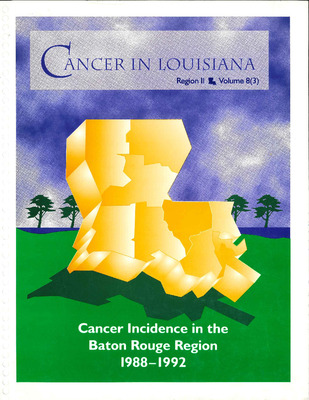
Cancer in Louisiana: Volume 8(3)
Louisiana Tumor Registry, Vivien W. Chen, Patricia A. Andrews, Catherine N. Correa, Xiao-Cheng Wu, Michael H. Martin, Lori C. McCallum, and Gay F. Duke
Cancer Incidence in the Baton Rouge Region, 1988 - 1992
The Louisiana Tumor Registry can be reached at [email protected]
-
Cancer in Louisiana: Volume 7
Vivien W. Chen, Elizabeth Fontham, Frank D. Groves, Jean Fike Craig, and Pelayo Correa
This is the first "user friendly" monograph to compare cancer incidence rates by region in South Louisiana and with the "national" rates. The data cover a four year period, 1983 - 1986, and include 35 parishes, representing 72% of the state's population. South Louisiana is the heartland of the Cajun culture and the most heavily industrialized area in the state. This monograph is intended to help convey Louisiana cancer facts to both scientific and non-scientific audiences.
-
Cancer in Louisiana: Volume 6
Vivien W. Chen, Jean Fike Craig, Elizabeth Fontham, Youping Lin, and Pelayo Correa
Cancer registration in Louisiana has developed gradually. It has been providing important information since 1947 when the Charity Hospital Tumor Registry was established. The Charity Hospital Registry was an important source of information on cancer patient survival for the National Cancer Institute publications on "End Results", in which a large proportion ( 44 % ) of the data on blacks were from this source. In 1973 the National Cancer Institute provided funds for an incidence registry to cover the three parishes of the Greater New Orleans Area. It provided very valuable data which became part of the Surveillance, Epidemiology and End Results (SEER) program and publications. The National Cancer Institute ceased to fund the Registry in 1980. The state Health Department then funded the Registry and placed it administratively first under Charity Hospital and then under the Office of Health. Professionally and technically, however, the Registry is directed by the Louisiana Cancer and Lung Trust Fund Board. The expansion of the Registry has followed careful planning. This monograph represents the first phase of the expansion to include the remaining parishes of South Louisiana. Data from the area incorporated in the south are important for several reasons: it represents the heartland of the Cajun culture and it represents the area most heavily industrialized in the state. This unique combination provides excellent opportunities for research into the causation and natural history of cancer. The data in this monograph are presented as numbers of cases and age-adjusted incidence rates. This facilitates comparisons between the different southern regions and provides basic information which allow further analysis and interpretation. The published figures are provided to the scientific community with the hope that they will be analyzed in order to advance our knowledge about the cancer problem in Louisiana.
-
Cancer in Louisiana: Volume 5
Frank D. Groves, Jean Fike Craig, Pelayo Correa, Vivien W. Chen, Elizabeth T.H. Fontham, and Diego Zavala
This fifth volume of "Cancer In Louisiana" Is the first to focus exclusively on childhood cancer. In view of the relatively small population at risk, ten years of data from the Louisiana Tumor Registry have been analyzed, from 1974 through 1983. Cancer Incidence reports are available for this period only from the Greater New Orleans area, comprising the parishes of Jefferson, Orleans, and St. Bernard. (Mortality figures, however, are available for the entire state.) Comparison Is made with the Incidence rates for the SEER program from 1974 through 1983, as derived from the SEER user tape (1) and the SEER population tape (2). The first four volumes of "Cancer In Louisiana" dealt primarily with adult cancers, of which the overwhelming majority are carcinomas (epithelial tumors). For adult tumors, therefore, It was appropriate to use a classlflcatlon system based primarily on anatomical site. In children, however, carcinomas are exceedingly rare. Most pediatric tumors are sarcomas, lymphomas, leukemias, or primitive embryonal cell lines which are not necessarily limited to a specific part of the body. Therefore, it is more appropriate to classify pediatric tumors according to histology rather than anatomic site. The classification scheme used In this volume Is adapted from the "Manchester" classification as reported In the literature (3) and adopted by the International Agency for Research on Cancer (4). In this classlflcatlon scheme, most pediatric tumor types fall into one of ten major groups. An eleventh group Is reserved for the occasional carcinomas, and all other tumors fall Into the twelfth category. For each of the ten maJor pediatric cancer groups, Incidence rates per million child-years-at-risk have been calculated. Most of the ten major groups can be subdivided Into several distinct histologlc subtypes. For each subtype, the numbers of cases have been tabulated by age, sex, and race, but Incidence rates have not been calculated because of the smal I numbers of cases. Charts and graphs have been prepared to compare cancer Incidence rates for each tumor type between males and females, between blacks and whites, between New Orleans children and children In the SEER program, and between the various hlstologlc subtypes. The reader Is cautioned to observe the +/- one standard error which Is Included In the table of rates. 95% confidence Intervals (+/- two standard errors) are presented In the graphs. The rates are considered significantly different only if the 95% confidence Intervals do not overlap each other. The cover of this monograph illustrates two of the three patterns found In childhood cancer when examining age at diagnosis. The significance of the illustratlon is explained further In the Executive Summary.
-
Cancer in Louisiana: Volume 4
Vivien W. Chen, Jean Fike Craig, Elizabeth Fontham, Youping Lin, and Pelayo Correa
The first Louisiana Tumor Registry (LTR) monograph provided background data on the Louisiana population, mortality rates for the state as well as incidence rates for the New Orleans metropolitan area compared to those of the United States. The second monograph focused on the magnitude of the cancer problem in Louisiana and the cancer mortality profile of our state as compared to other states. The third monograph described the new additions to the incidence oriented registry, provided data on time trends of cancer incidence in greater New Orleans, comparisons with SEER registries and age-specific incidence rates . The present (fourth) monograph provides mortality rates for the four regions of the state: Acadiana, Baton Rouge and Florida parishes, Northern Louisiana and Greater New Orleans, as well as comparable data for the state as a whole and for the United States . The time trends of each region are provided for four sex-race groups. Age-specific mortality rates for the state are presented and compared with those of the United States. In addition, abstracts of final reports of research grants funded by the Louisiana Cancer and Lung Trust Fund Board in 1985 are included. The four monographs, therefore, provide abundant data on cancer frequency in the state which hopefully will be utilized by the scientific and lay communities to better understand our cancer problem and develop strategies to deal with it. The cover of this monograph illustrates the marked decreases in Hodgkin's disease mortality observed in all regions of the state. Since the incidence of this neoplastic disease has not decreased (Monograph III), these decreases in mortality most probably indicate advances in therapy, which should bring some optimism to our community and reassure our medical care personnel that their actions are having a positive impact on the health of our population . Geographic analysis reveals excesses in mortality Greater New Orleans for cancers of the oral cavity and pharynx, colon, rectum, and bladder as well as kidney cancer in males only. Acadiana shows excesses for cancer of the stomach, pancreas, esophagus (males only), larynx (blacks only) and kidney (females only). Baton Rouge shows excess malignant melanoma rates. Cancer of the cervix is excessive in North Louisiana. Rectal cancer mortality is also decreasing in all race-sex groups which agrees with the incidence trends in males but contrasts with incidence trends in females (Monograph III). Cancer of the stomach and cancer of the cervix show marked decreases in mortality rates over time in blacks. Such trends are not clear in whites, perhaps because marked reductions in the rates for these cancers in whites took place years ago. Respiratory cancer rates continue to increase in blacks while trends are decreasing for laryngeal cancer in whites and apparently leveling-off for lung cancer in white males. These trends may reflect changes in the smoking habits of the race-sex groups being considered. The figures also show an increase in kidney cancer in black females in all regions. Liver cancer is decreasing in whites but increasing in blacks and shifting its apparent cluster from Acadiana to the greater New Orleans area. The structures of the age-specific curves reveal some interesting patterns. Cancers of the oral cavity and pharynx, esophagus and larynx exhibit 2-slope or dome shaped curves, which suggest either a non-homogenous delivery of carcinogens over time or an increase in incidence in younger cohorts by the introduction of a new carcinogen or an increase in the dose of an old one. Pre-menopausal peaks in both incidence and mortality from cervical cancer have been found in Louisiana data for both races in both time periods. Other atypical mortality curves which need further research are those of cancers of the ovary, bladder, kidney and multiple myeloma.
-
Tumor Registry: 1948 - 1984
R. Davilene Carter, David Faddis, Edward T. Krementz, Sandra L. Owens, Jane D. Rodriguez, Joseph V. Schlosser, and Robert G. Weilbaecher
This Charity Hospital Tumor Registry monograph covers the period 1948 through 1984, and includes all patients with a diagnosis of cancer who were seen at Charity Hospital of Louisiana at New Orleans. A total of 55,384 cases were abstracted of which 49,529 are described in the monograph. This Registry includes skin cancer and all in situ cancers as well as 236 benign mixed tumors of the salivary gland, 340 meningiomas of the brain, 119 carcinoid tumors of the intestine, and 72 granulosa cell tumors of the ovary. Excluded from analysis were 5,855 cases because of lack of histologic confirmation or too few histologic types for analysis, (e.g. lung cancer was divided into epidermoid, adenocarcinoma, alveolar and small cell; 665 cases were excluded because of no histologic confirmation and 214 cases were excluded because of other histologies). The Tumor Registry data is abstracted from Charity Hospital records and includes age, sex, race, residence, primary site, histologic type, extent of spread of disease at diagnosis, date of diagnosis, initial and subsequent treatment, vital status and date of last follow-up. Patients are entered into the registry according to year of initial diagnosis. Initial treatment is considered as any treatment within two months of diagnosis for leukemia and within four months for other cancers. Follow-up is maintained annually. Only 3% of all cases have been lost to follow-up. Relative survival rates are utilized throughout the monograph and represent the proportion of mortality which is directly ascribable to the cancer excluding other causes of death. Descriptions of all sites include: sex and race distribution, age at diagnosis by decade, stage of disease, relative survival rates and treatment experience for selected sites. Many sites have been described separately by histologic type (e.g. epidermoid carcinoma of the lung, adenocarcinoma of the lung, alveolar carcinoma of lung and small cell carcinoma of the lung). In the text the bold print represents Charity Hospital experience. This is followed by the Third National Cancer Survey experience for reference for most sites, SEER 1973-77 study for selected sites, followed by a general discussion. Summary tables of these two studies as well as incidence and mortality rates from Louisiana Tumor Registry and the American Cancer Society 1985 statistics are shown in the appendix. Treatment by radiation therapy, surgery and drug therapy described in the text reflects the standard practice at the time of writing the monograph. This Registry is one of the oldest hospital tumor registries in the United States. Moreover, it uniquely reflects the natural history of cancer in a large black population. This Registry participated in the End Results Program of the National Cancer Institute since its inception until 1977, and contributed 44% of the black cases in their last publication: Cancer Patient Survival Report Number 5. Comparisons of cancer in black and white patients have been made throughout the monograph. There were several major socio-economic shifts in the patient population of Charity Hospital. The first occurred with full integration in 1957 followed by Medicare in 1965 with subsequent reduction in hospital bed capacity.
-
Cancer in Louisiana: Volume 3
Pelayo Correa, Vivien W. Chen, Jean Fike Craig, and Frank D. Groves
This third volume of Cancer in louslana provides new informatton on three general areas of cancer incidence : (1) - Time trends In two four-year periods (1974-1977 and 1978-1981). (2) - Comparison with other SEER registries. (3) - Age-specific Incidence curve . Additionally, a short summary of risk factors implicated for each cancer site ts provided. All data refer to invasive (and exclude "in situ") cancers. The information on time trends Is of great interest. It agrees with national trends of declining mortality rates for cancer of the cervix and stomach; it offers some hope that the rates of lung cancer are beginning to stabilize In white males; and it shows an Interesting contrast between rising rates of esophageal cancer and declining rates for cancer of the oral cavity, in spite of the simtlartty of their etiologic factors. A word of caution is indicated, especially when lnterpreting decines in incidence rates. As Indicated in the historical note on page 1. the Registry went through a period of uncertain survival, changes in administrative structure, and shortages of personnel around 1979 - 1981. Although all efforts for complete coverage were made, it is possible that some subregistratlon occurred, being felt most severely in the accrual of cases for 1980, which registered the lowest number of cases In any year for all cancers as well as for cancers of the oral cavity, colon, rectum, pancreas, uterine corpus, kidney, central nervous system, melanoma, and leukemia. The numbers of cases registered for all sites each year were as follows: 1974 = 3,473; 1975 = 3,639; 1976 = 3,683; 1977 = 3,910 ; 1978 = 3,894; 1979 =3,777; 1980 = 3,351; and 1981 = 3,588. It appears, then. that only in 1981 did the Registry begin to recover from the years of administrative problems. The dedication of part of the cigarette tax to cancer registration has been a very positive influence on the stability of the Registry. The above remarks indicate that any Increase in cancer rates between 1974 and 1980 is probably an underestimate and that a decline between the two time periods needs to be substantial to be of biologic significance. Some of the declines are "statistically significant" because these tests are greatly influenced by the number of cases under study. Most of them, however, may not be of biologic significance. Only future data will allow us to state which declines are reliable and which are artifactual . At the present time , the Registry is gradually expanding and is entering the era of greater mechanization of data management. These developments will enable us to provide more and better services to the community of our state.
-
Cancer in Louisiana: Volume 2
Pelayo Correa, Vivien W. Chen, Jean Fike Craig, and Diego E. Zavala
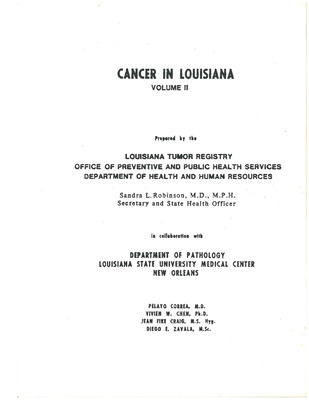
The Louisiana Tumor Registry in collaboration with the Department of Pathology, LSU Medical Center has prepared this second volume of Cancer in Louisiana in response to the legislative requirements concerning annual reports on cancer. Although incidence rates are pref er able in determining the severity of the cancer problem, in Louisiana they are only available for the New Orleans metropolitan area. In 1983 the Louisiana Tumor Registry expanded to cover the southern portion of the state and in 1985 expanded to cover the northeast area. Contracts with regional tumor registries are being utilized in order to provide population-based incidence data. Increased funding by the Legislature will be necessary in order to cover the rest of the state and determine the number of new cancer cases in Louisiana. The geographic distribution of cases and risk factors which are associated with the serious cancer problem in Louisiana are important items which must be investigated in order to have a rational approach to the control of cancer in Louisiana. In addition to the incidence data produced by the Louisiana Tumor Registry, this report utilizes graphs, charts, and maps based on statistical data reported in the £_. §. Cancer Mortality Raandt eTrsends 1950-197V9ol,u me I-m by the U.S. Environmental Protection Agency and the National Cancer Institute. Thomas Ballinger from the Public Health Statistics section of the Office of Preventive and Public Health Services provided 1983 death statistics for Louisiana. We extend our thanks to Louise Bellazer, Bea Bonin, and George Blount for typing and helping with the preparation of this monograph, and to Kenneth Jones for designing the front cover. It should be noted that for the decade of the 1970's Louisiana ranked first in the death rates of white males due to lung cancer and the gap between Louisiana and the rest of the states is increasing (see Figure 7 A). During the same decade, for all cancers combined, Louisiana white males ranked fourth out of fifty states.
-
Cancer in Louisiana: Volume 1
Pelayo Correa, Vivien W. Chen, Jean Fike Craig, Thomas Ballinger, William Campbell, and Diego E. Zavala
Cancer in Louisiana, Volume VII is a complement of its preceding volume. It depicts the data contained in Volume VI in graphic form to emphasize the findings. In addition, this monograph provides information on geographic variation among the five regions in Louisiana (intrastate comparison) and compares incidence rates for all of South Louisiana with those of individual registries in the SEER (Surveillance, Epidemiology and End Results) program as well as with the overall SEER rates. The SEER program of the National Cancer Institute was established as a result of the National Cancer Act of 1971 which mandated the collection, analysis, and dissemination of cancer data. The SEER program collects incidence data from designated population-based registries in various areas of the country. These registries represent approximately 10% of the United States population. Even though they are a non-random sample, selected mainly because of unique population characteristics, their combined rates are usually reported as the "national" rates. The SEER database used for comparison in this monograph includes five states and four metropolitan areas: the states of Connecticut, Iowa, New Mexico, Utah, and Hawaii and the metropolitan areas of Detroit, San Francisco-Oakland, Atlanta and Seattle-Puget Sound. It should be noted that the black population of the SEER program represents predominantly urban blacks, whereas the white population includes one predominantly rural state (Iowa) and a state with a 70%, Mormon population known to experience lower cancer rates (Utah). A detailed description of the Louisiana Tumor Registry (L TR), its regional registries and its operation was presented in the first chapter of Cancer in Louisiana, Volume VI. The procedures for data collection, quality control, and computation of incidence rates are also included in Volume VI. Parishes covered by each region, population pyramids and a description of the population characteristics of each region are presented in this volume as well as in Volume VI.
-
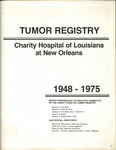
Tumor Registry: 1948 - 1975
Pelayo Correa, Marise S. Gottlieb, Edward T. Krementz, Jane D. Roberts, and Robert G. Weilbaecher
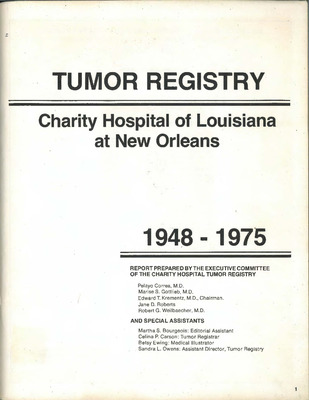
This Charity Hospital Tumor Registry monograph covers the period 1948 through 1975, and includes all patients with a diagnosis of cancer who were seen at Charity Hospital of Louisiana at New Orleans. A total of 45,493 cases were abstracted of which 41,049 are described in the monograph. This Registry includes skin cancer and all in situ cancers as well as 189 benign mixed tumors of the salivary gland, 262 meningiomas of the brain, 191 carcinoid tumors of the intestine, and 58 granulosa cell tumors of the ovary. Excluded from analysis were 4,444 cases because of lack of histologic confirmation or too few histologic types for adequate analysis, e.g. lung cancer was divided into squamous and adenocarcinoma; 397 cases were excluded because of no histologic confirmation and 289 cases were excluded because of other histologies. The Tumor Registry data is abstracted from Charity Hospital records and includes age, sex, race, residence, primary site, histologic type, extent of spread of disease at diagnosis, date of diagnosis, initial and subsequent treatment, vital status and date of last follow-up. Patients are entered into the registry according to the year of initial diagnosis. Initial treatment is considered as any treatment within two months of diagnosis for leukemia and within four months for other cancers. Follow-up is maintained annually. Only 3% of all cases have been lost to follow-up. Relative survival rates are utilized throughout the monograph and represent the proportion of mortality which is directly ascribable to the cancer excluding other causes of death. Descriptions of all sites include: sex and race distribution, age at diagnosis by decade, stage of disease, relative survival rates and treatment experience for selected sites. Many sites have been described separately by histologic type (e.g. squamous cell carcinoma of the lung and adenocarcinoma of the lung). In the text the bold print represents Charity Hospital experience. This is followed by the Third National Cancer-Survey experience for reference when available, followed by a general discussion. Treatment by radiation therapy, surgery and drug therapy described in the text reflects the standard practice at the time of writing the monograph. Treatment experience of patients described reflects the standard treatment at the time of their diagnosis. This Registry is one of the oldest hospital tumor registries in the United States. Moreover, it uniquely reflects the natural history of cancer in a large black population. This Registry has participated in the End Results Program of the National Cancer Institute since its inception and contributed 44% of the black cases in their last publication: Cancer Patient Survival Report Number 5. Comparisons of cancer in black and white patients have been made throughout the monograph.